When I spend time in Manuel Antonio and Quepos, it’s easy to get caught up in the beauty of it all. The ocean, the monkeys, the little cafes tucked into the hills all make it so special. Everything feels peaceful. But the more time I spend there, the more I start to see the reality underneath the calm. Life may look slow from the outside, but people here work incredibly hard. The “pura vida” feeling doesn’t mean people aren’t hustling, it just means they go about their days with a groundedness that’s different from what we are used to at home.
Most of the people I meet in Quepos are part of the working class. Tourism is the main source of income for many people. Some of my friends teach surf lessons, others work in the national park or in small hotels, some are chefs, and others are captains of fishing boats. Even the vendors who sell coconut water on the beach have been doing it for generations. I have been seeing the same familiar faces on the beach for as long as I remember. One guy in particular sells snow cones and they are divine. I’ve been seeing him all my life and it is special to have that relationship with someone. A lot of time life in CR looks effortless, but it’s all built on long days, early mornings, and the rise and fall of the tourist season. During the rainy months, when visitors slow down, a lot of families feel that drop immediately. It made me realize that the peacefulness I feel there is real, but it exists alongside constant work that most tourists never think about.
Manuel Antonio Town
This is where most working class people live in Costa Rica and where the real authentic Costa Rican lifestyle can be found.
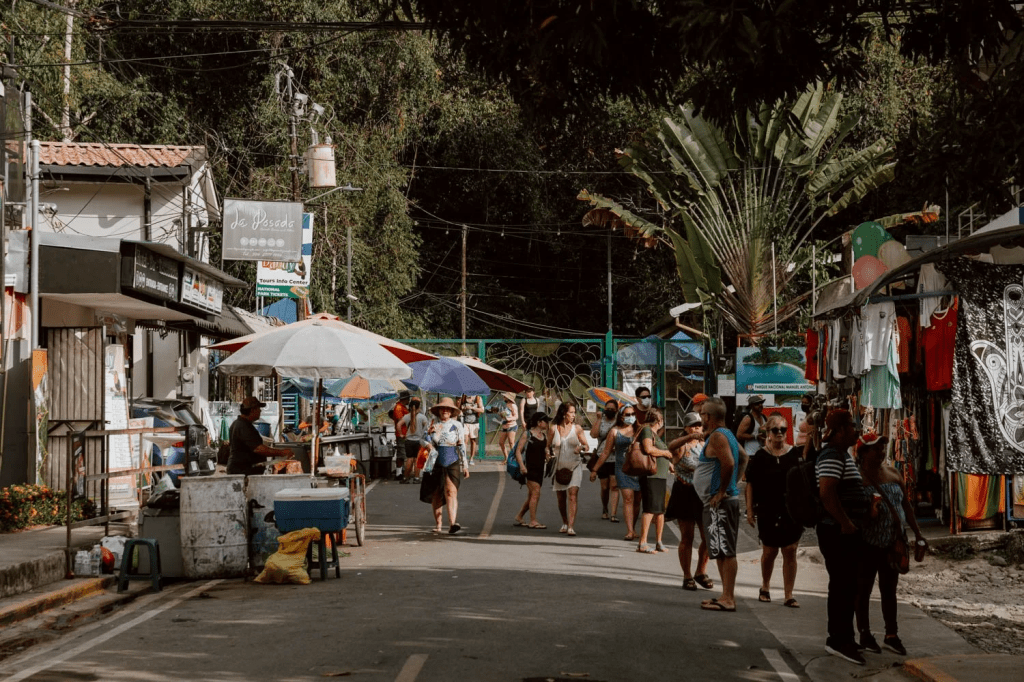
Learning about land rights in LAC class made this image hit even harder. The readings talked a lot about how, in many Latin American countries, power sits with whoever controls the land. In the reading about Argentina, called “Modern Latin America” by Skidmore and Smith, for example, elites, landowners, and political leaders shaped almost everything about society because they had direct control over land and labor. They used that power to determine wages, to control policies, and to decide who benefitted and who didn’t. That made me think about Costa Rica in a different way. Because Costa Rica has made completely different choices.
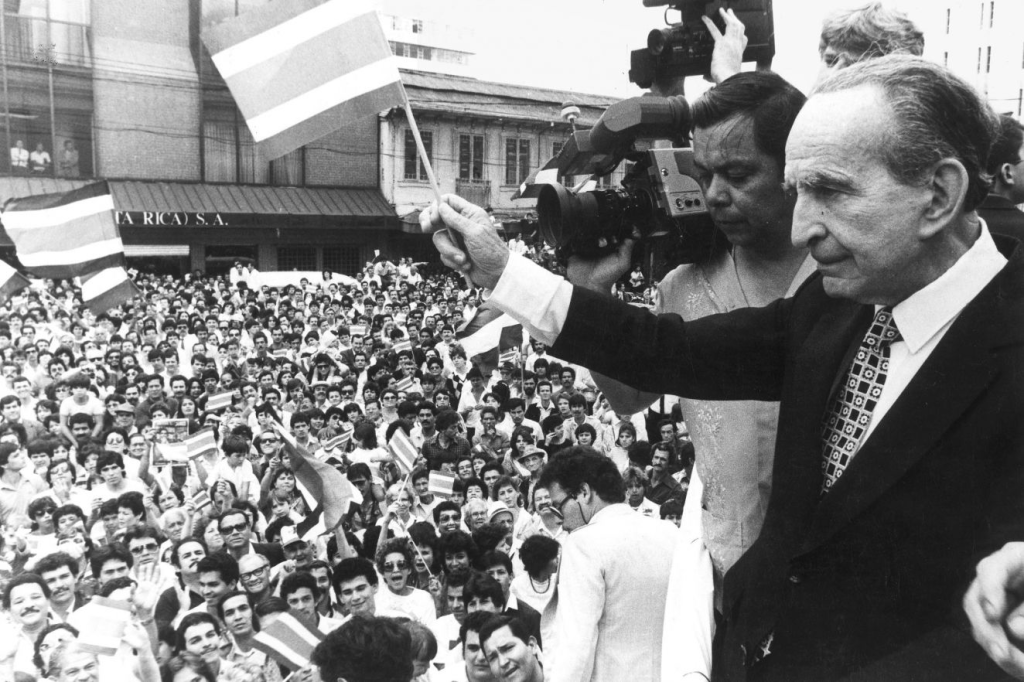
In 1948, after a civil war, Costa Rica abolished its army. A man named José Figueres Ferrer led that movement, and pushed the country toward investing in education, healthcare, and most importantly for Manuel Antonio, environmental protection. He and some of his predecessors created national parks, set aside massive areas of land to be protected, and made conservation a dominant part of national identity. Manuel Antonio National Park, for example, exists because the government intentionally protected that land instead of letting private companies develop it. That choice didn’t just shape the environment, but it shaped people’s lives, jobs, and the entire feeling of the area.
José Figueres Ferrer abolishing the army (1948)
Because the land was protected, local families (and tourists) still have space to fish, surf, open small businesses, and live connected to the ocean instead of being pushed inland by big resorts and corporate ownership. When people talk about pura vida, I realize now that it’s not just a cultural expression, it’s the result of actual political decisions that made life less dominated by elites and more balanced between the land and the people. It’s a completely different story from what we learned about Argentina in class, where land inequality shaped nearly everything about social class and politics. In Costa Rica, the government actively prevented that kind of inequality from becoming the norm. I think this is such a huge part of why Costa Rica is SO special.
On the beach of Manuel Antonio
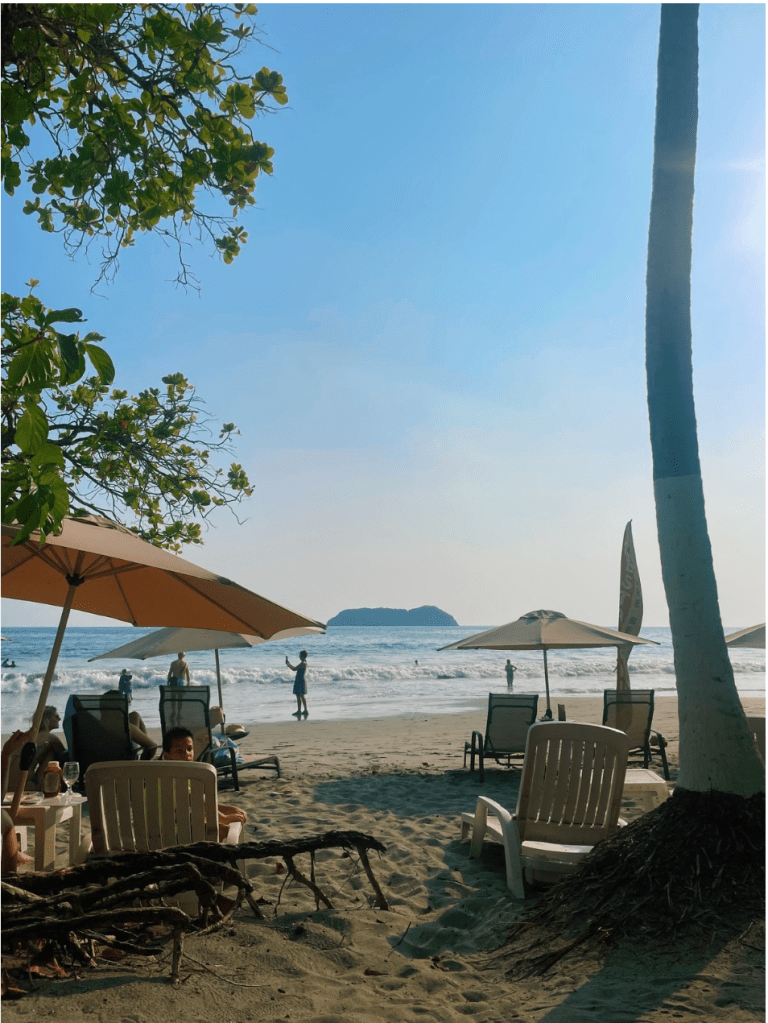
Now, after discussions in class, when I walk through Manuel Antonio now, I will see how everyday life exists because the land stays public and protected. Leaders chose to keep the parks and coastline open, and that choice shaped the town.
Works Cited:
Skidmore, Thomas E., et al. Modern Latin America. 8th ed., Oxford University Press, 2014.
“Manuel Antonio National Park.” Costa Rica Experts, https://costaricaexperts.com/things-to-do/wildlife/.
“José Figueres Ferrer.” Encyclopædia Britannica, https://www.britannica.com/biography/Jose-Figueres-Ferrer
 <em>Traveling Through Manuel Antonio: My Costa Rica Experience"</em><br><br><br>