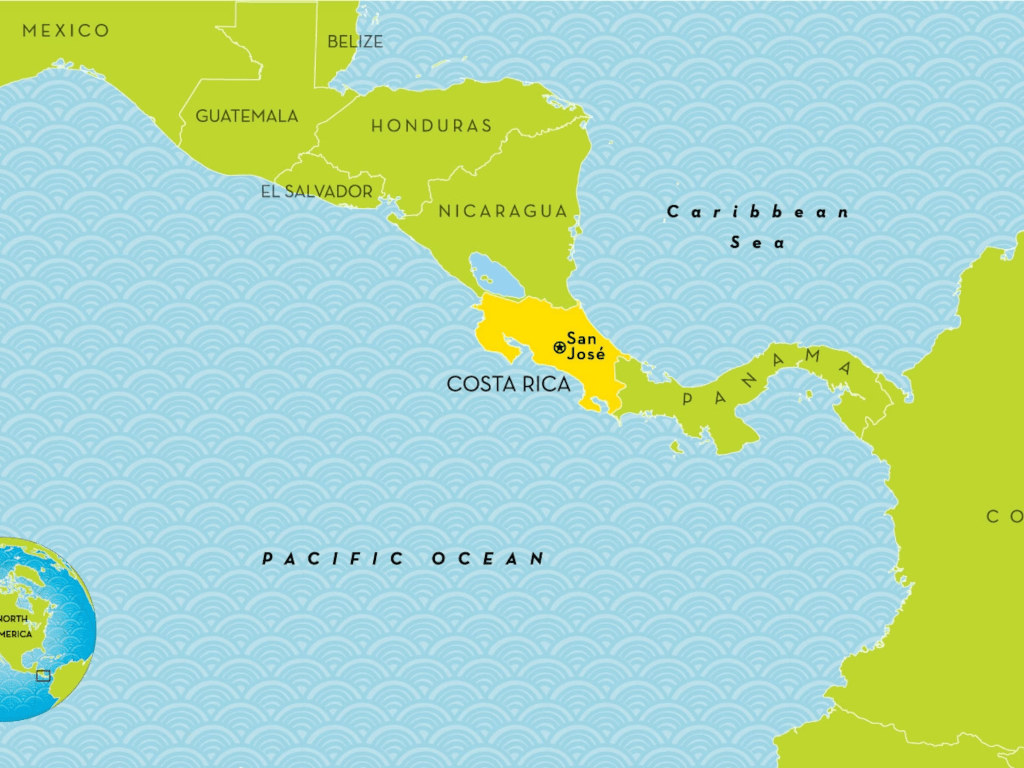
One of my favorite parts about being in Costa Rica is the food. The flavors of meals are vibrant but simple, and every meal feels like it reflects the heart of the culture—warm, welcoming, and deeply tied to the land. Over the years of visiting Manuel Antonio and Quepos, I’ve come to appreciate not only just how delicious Costa Rican food is, but also the rich history behind it.
Costa Rican cuisine has deep roots that go back to the indigenous peoples, who relied on corn, beans, squash, cacao, and tropical fruits. When the Spanish arrived in the 1500s, they brought new ingredients like rice, pork, beef, dairy, and spices, which blended with native foods to create the foundation of today’s traditional dishes. Later, African and Caribbean influences along the coast added flavors like coconut, yuca, and plantains, making Costa Rican food a mix of many latin cultures. What’s special about the cuisine is how fresh and local everything is, with tropical fruits, seafood, and vegetables playing a huge role in everyday meals.
Coffee and fruit, especially bananas, play a huge role in Costa Rica’s culture and history. Coffee was once the country’s biggest export and helped shape its economy, while bananas became a major crop in the early 1900s, especially around areas like Quepos. Now, these products are vital to the economy and a part of daily life, with fresh coffee and tropical fruits enjoyed at nearly every meal.
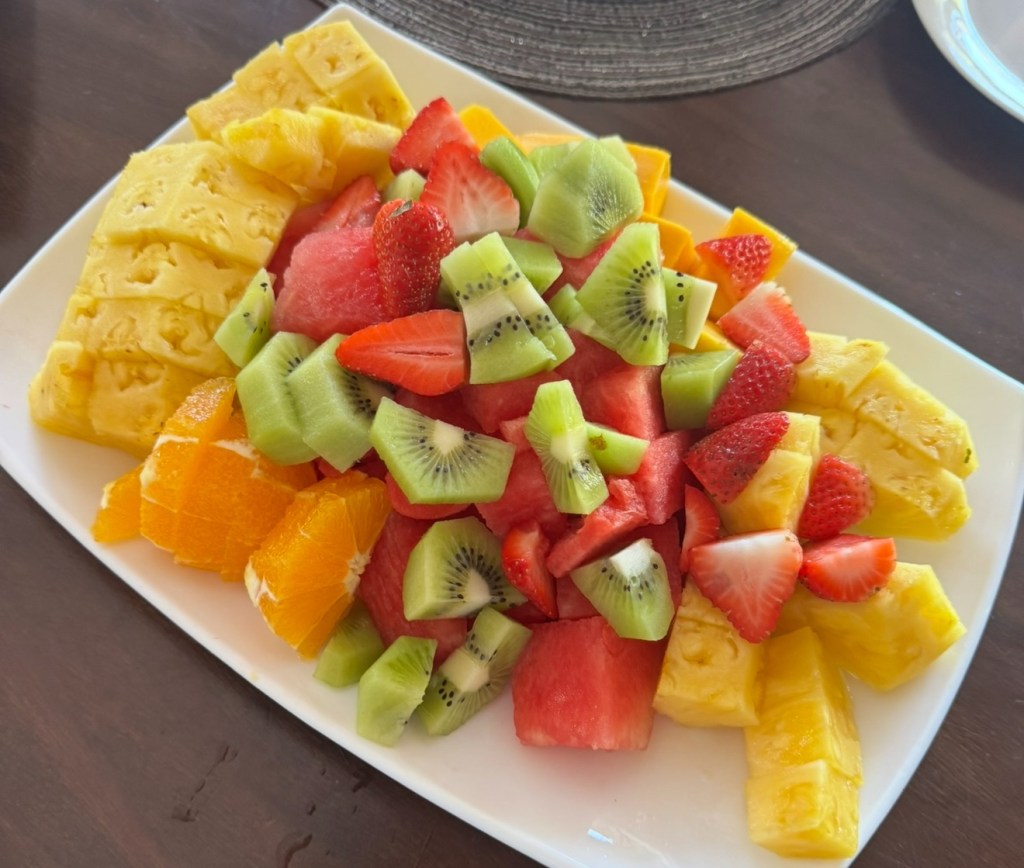
Fresh fruit from the local supermarket
My favorite foods will always be breakfast, specifically gallo pinto, Costa Rica’s most iconic breakfast. It’s a simple mix of rice and beans, but it’s so delicious, especially when paired with eggs and fresh cheese. When I am in Costa Rica, I eat gallo pinto for breakfast, lunch, and dinner often– I cannot stay away from it.

Breakfast from my favorite breakfast place in town, Emilio’s Cafe. This is a mix of eggs, fish cheese, Gallo pinto, plantains, and fresh fruit.
For lunch or dinner, the absolute best is the Costa Rican staple food of Casados. Personally, I like casado con pollo, “Casados” means “married” because it brings everything together on one plate—rice, beans, chicken, salad, and fried plantains. I love how satisfying it is and how it represents balance and togetherness, which are so important in Costa Rican culture.
Another favorite of mine is patacones. They’re sliced, fried, flattened, and fried again until perfectly crispy. I usually eat them with black beans or guacamole, and they’re the best snack to eat at the beach. Patacones trace back to African and Caribbean influences and show how different cultures have shaped Costa Rican cooking.

Me enjoying a patacon with guacamole, rice, and beans on the beach.
Two of my favorite Costa Rican desserts are tres leches and arroz con leche, both with roots in Spanish tradition. Tres leches is a soft sponge cake soaked in three kinds of milk. Arroz con leche is a creamy rice pudding flavored with cinnamon that has been enjoyed for generations. I love them because they’re simple, sweet, and always remind me of family gatherings in Costa Rica.
One day, I hope to get married and serve all of these foods at my wedding. Costa Rican cuisine is truly mouth watering and delicious. The rich flavors and sweet fruits are to die for and Every bite tells a story of rich culture.
Works Cited
“Costa Rica Food.” CostaRica.org, costarica.org/food/. Accessed 24 Sept. 2025.
“Costa Rican Cuisine – What Is It and Where Did It Come From?” Tico Times, 26 Jan. 2023, ticotimes.net/2023/01/26/costa-rican-cuisine-what-is-it-and-where-did-it-come-from. Accessed 24 Sept. 2025.



 <em>Traveling Through Manuel Antonio: My Costa Rica Experience"</em><br><br><br>